17. How fast can commercial cells really charge?

Featured
Energy cells vs. power cells – charging rate

Belharouk et al, 2018, Electrochemical Communications – charging limits of NCM811 cathodes and graphite anodes

Bhagat et al, 2018, Electrochimica Acta – charging limits of commercial energy cell

Miller et al, 2017, SAE – charging limits of commercial power cell

In this podcast I discuss the charging rate limits for commercial electrode materials as well as commercial cells. They are faster than you may think.

16. 2 minute charge? Impossible!

Featured

Patent application

Bruce Dunn

This material can charge in 2.5 minutes, > 10,000x.

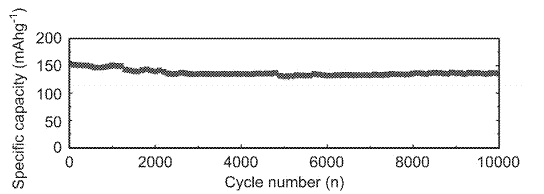
Currently commercial lithium ion batteries typically charge in 1.5 – 2 hours. ‘Fast charge’ is limited to 30 – 45 minutes and with harsh consequences on cycle life and safety. However, there are battery electrode materials which blur the capacitor/battery line. MoS2 has been claimed by professor Dunn (UCLA) to be such a “pseudocapacitor”. This podcast discusses a patent claiming a pseudocapacitor electrode material which can charge in 2.5 minutes for > 10,000x and with a capacity > 120mAh/g.

> 10,000 cycles with no capacity fade at a charge/discharge rate of 23C (which corresponds to 2.5 minute charge). Capacity is stable > 120 mAh/g.

15. Amprius: silicon anodes by CVD

Featured
Amprius grows silicon directly off current collectors by CVD

Patent

Amprius website

Yi Cui – Stanford

Growing silicon directly off current collectors (by CVD) offers a rich library of strategies to solve traditional problems associated with silicon anodes. However, it also raises a few new ones. Find out more in my latest podcast.

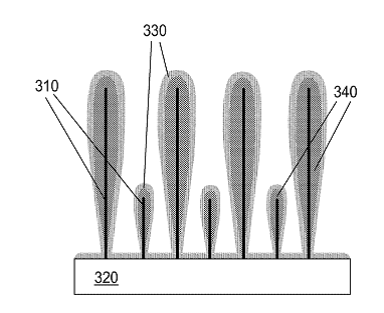
Silicon active material (340) is grown onto nickel silicide template (310) and may be coated by carbon or lithium conducting shell (330). The silicide template is hard rooted onto the copper current collector (320) for enhanced electron conductivity.

14. 1D Silicon anodes from Sila Nanotechnologies

Featured
Why is BMW investing in this company?

2017 Sila US9673448

Professor Gleb Yushin’s page

Sila Nanotechnology

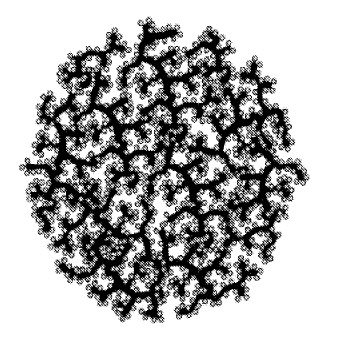
Secondary particle of Sila’s silicon anode depicting the 1D carbon whiskers for electron conductivity and the silicon nanoparticles for lithium capacity

Anodes with silicon active materials may offer more than 2x the capacity of anodes with graphite active materials and improved rates of operation due to a low risk of lithium plating. A 1D architecture consists of ultrathin wires or whiskers as opposed to ultrathin sheets (2D). Emerging from the lab of professor Gleb Yushin, Sila Nanotechnologies focuses on such electron conductive wires (carbon based) decorated with silicon nanoparticles. This concept provides a highly porous secondary structure where the silicon particles have room to expand and contract without cracking the overall anode structure and is claimed to work well with liquid electrolyte systems. This podcast dissects a 2018 patent which claims Sila’s core silicon anode technology.